EV Charger Wiring & Conduit Repair in Issaquah
Is your charging station locking out due to ground faults, voltage drops, or heat-degraded conductors? Our certified electricians repair hidden wiring faults and bring circuits into strict compliance with NEC Article 625.
Ensuring Flawless Electrical Infrastructure Behind the Wall
An EV charger is only as dependable as the dedicated branch circuit feeding it. In many homes across Issaquah, original branch circuits were completed using undersized wiring, inappropriate cable types, or inadequate grounding paths. When subjected to 7 to 10 hours of continuous high current, these concealed wiring flaws result in charred junctions, tripped breakers, and ground fault lockouts. We repair and rewire EV branch circuits with precision.
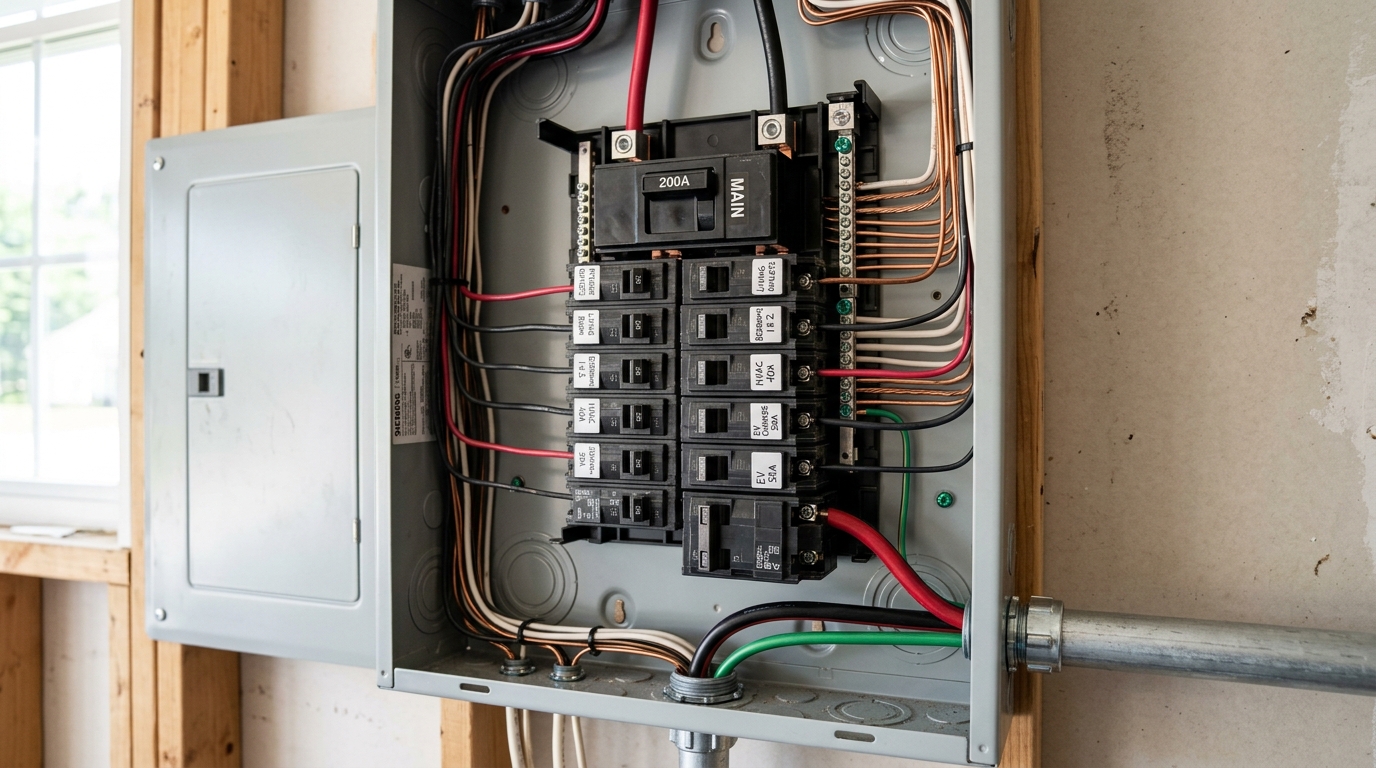
Common EV Wiring Failures We Repair
- Undersized Conductor Replacement: Replacing overheated #8 or #10 AWG wiring with proper #6 or #4 AWG copper to eliminate voltage drop and overheating on 40A/48A charging setups.
- Ground Fault & Floating Ground Repair: Re-establishing continuous low-impedance Equipment Grounding Conductors (EGC) to satisfy strict EVSE microprocessor safety checks.
- Conduit Separation & Water Ingress Remediation: Repairing separated metallic (EMT) or PVC conduit fittings that allow rainwater into junction boxes and ground-out conductors.
- Burnt Junction Box Rebuilding: Eliminating melted wire nuts, installing Polaris-style insulated mechanical lugs, and replacing scorched metal junction boxes.
- Aluminum Wiring Remediation: Safely terminating or repulling aluminum feeders that have loosened and arced under continuous thermal load.
🛑 Ground Fault Lockout
Chargers monitor earth resistance. If ground resistance drifts or a neutral conductor is grounded downstream, the station refuses to charge.
📉 Excessive Voltage Drop
Undersized wire over long runs (from detached garages or basement panels) drops voltage below 208V, causing chargers to fault out.
⚡ Insulation Breakdown
Heat-baked conductor sheathing cracks inside conduits, causing micro-shorts and random breaker trips that are difficult to locate.
Washington State WAC 296-46B Compliance Guaranteed
In Washington State, Department of Labor & Industries (L&I) electrical codes mandate rigorous safety standards for continuous high-load EV circuits. Our repairs strictly adhere to NEC continuous load derating (125%), proper conduit support intervals, and correct conduit fill calculations to ensure your home remains safe and fully insured.
Dealing with an EV Wiring or Ground Fault in Issaquah?
Speak directly with an experienced Issaquah electrical technician. We troubleshoot, repair, and install EV chargers across all Issaquah neighborhoods.
EV Wiring Repair FAQs
Frequently Asked Questions
Clear answers regarding EV charging repair, circuit diagnostics, and local Issaquah electrical standards.
Can standard Romex (NM-B) wire overheat on a 48-amp EV charger circuit? ▾
Yes. Under NEC 334.80, Romex (NM-B cable) must be sized based on the 60°C column of the ampacity chart. #6 AWG NM-B is only rated for 55 amps, which is illegal and unsafe for a continuous 48-amp load (requiring a 60-amp rated circuit). In warm attics or insulated garage walls, this causes insulation breakdown and thermal trips. We replace non-compliant wiring with 90°C THHN copper in EMT conduit.
What is an open ground or ground-fault error on an EV charger? ▾
An EV charger continuously tests for earth ground before allowing high-voltage contactors to close. If a grounding screw is loose, conduit connections are detached, or ground rod resistance is too high, the charger locks out and displays a red light to prevent user electrocution.
Can you repair wiring inside conduits without ripping open garage walls? ▾
Yes. When electrical conduit (EMT or PVC) is already in place, our electricians can pull out compromised or damaged wires and pull through brand-new, correctly sized THHN conductors with zero drywall damage.
How do you locate an electrical short or break inside a concealed wall? ▾
We utilize tone generators, circuit tracers, megohmmeters (insulation resistance testing), and infrared thermography to identify the exact coordinates of conductor breaks or thermal hot spots.
Why is aluminum wiring problematic for EV chargers? ▾
Aluminum wire expands and contracts at a much higher rate than copper. Under the thermal strain of daily 8-hour EV charging cycles, aluminum connections loosen, oxidize, generate extreme heat, and risk catching fire. We retrofit aluminum runs with proper copper transitions or certified Al/Cu mechanical lugs.