EV Charger Circuit & Breaker Repair in Issaquah
When the dedicated circuit powering your EV charger repeatedly trips, hums loudly, or produces a hot electrical smell, our licensed electricians isolate the fault, repair the circuit, and restore safe power delivery.
Specialized Circuit & Overcurrent Protection Repairs
Unlike ordinary household circuits that cycle on and off for minutes at a time, dedicated EV charging circuits carry sustained, maximum-rated current for 4 to 10 continuous hours every night. This severe duty cycle exposes every weak link in the electrical branch circuit. We specialize in diagnosing and repairing dedicated 240V circuits feeding residential and commercial chargers throughout Issaquah.
- Thermal-Magnetic Breaker Replacement: Replacing degraded, buzzing, or heat-damaged 40A, 50A, and 60A double-pole breakers with OEM-certified replacements.
- Panel Busbar Arcing Repair: Cleaning, treating, or relocating breaker positions on panels where loose breaker stabs have created pitting and oxidation.
- Conductor & Conduit Repair: Pulling fresh THHN/THWN copper conductors through existing conduits to replace heat-degraded or nicked wires.
- Terminal Re-Torquing to Manufacturer Spec: Utilizing calibrated torque screwdrivers and wrenches to eliminate micro-gaps that cause dangerous resistive heating.
- GFCI Conflict Resolution: Diagnosing and rectifying nuisance tripping caused by dual-GFCI feedback loops between panel breakers and charger microcontrollers.
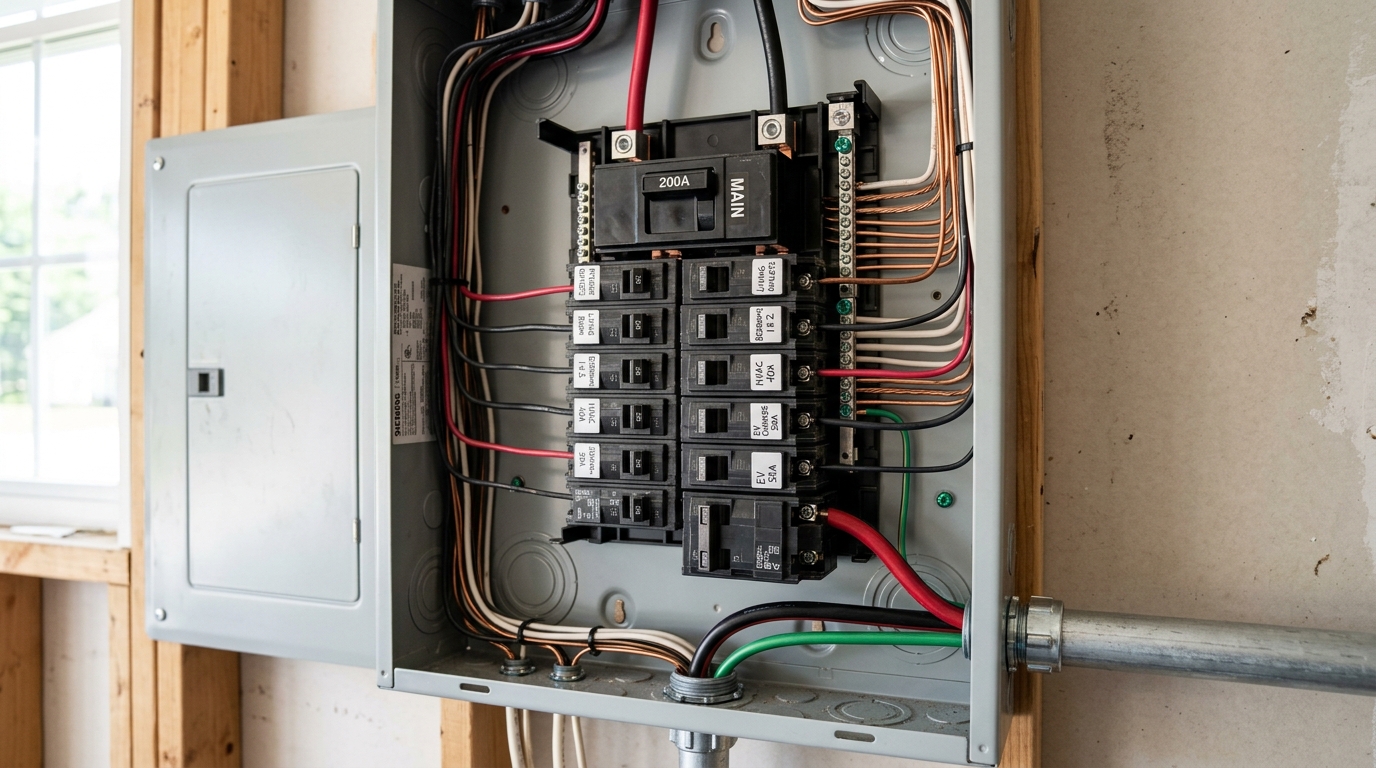
Why EV Breakers Trip & How We Fix Them
EV charging breaker trips fall into three distinct electrical categories:
🔥 1. Slow Thermal Overload Trip
Trips after 30 to 120 minutes of charging. Indicates that internal breaker temperature exceeded 140°F due to loose terminal screws, undersized wiring, or degraded internal springs.
⚡ 2. Instant Magnetic Short-Circuit Trip
Trips with a loud snap the instant charging initiates. Indicates a direct short inside the charging unit contactor, water in junction boxes, or pinched conduit wires.
🔄 3. Nuisance GFCI Trip
Trips intermittently at random intervals. Caused by high-frequency inverter noise, minor moisture tracking, or an illegal double-GFCI circuit conflict.
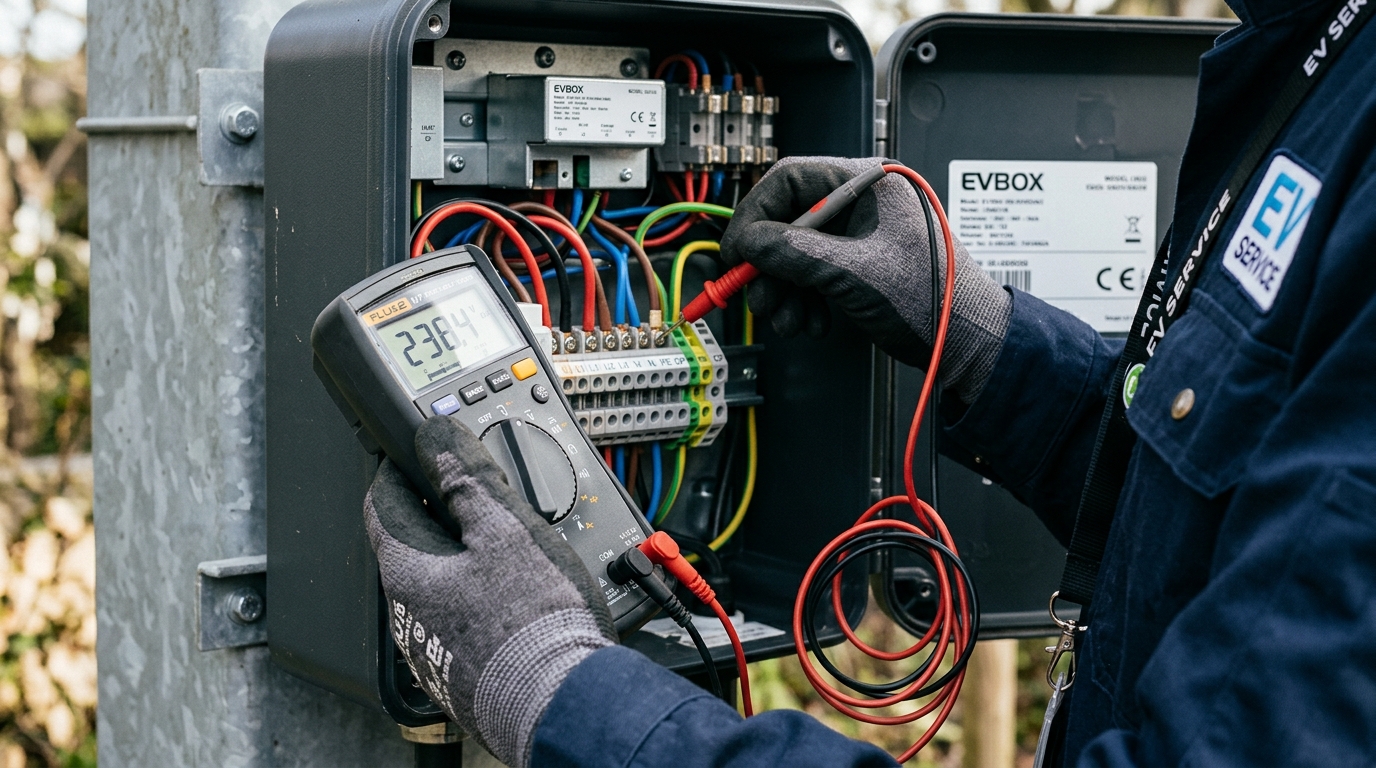
Strict Adherence to NEC Article 625 & WAC 296-46B
In Washington State, electric vehicle branch circuits are strictly regulated under WAC 296-46B and the National Electrical Code. Our licensed electricians ensure that every circuit repair incorporates proper wire ampacity derating (taking into account attic ambient temperatures and conduit fill), proper conductor insulation ratings (75°C/90°C), and secure mechanical grounding.
EV Charger Tripping Your Breaker in Issaquah?
Speak directly with an experienced Issaquah electrical technician. We troubleshoot, repair, and install EV chargers across all Issaquah neighborhoods.
EV Circuit Repair FAQs
Frequently Asked Questions
Clear answers regarding EV charging repair, circuit diagnostics, and local Issaquah electrical standards.
Why does my EV charger breaker trip after 20 to 45 minutes of charging? ▾
This is typically caused by thermal overload. Circuit breakers have thermal-magnetic trip curves. Under continuous high-amperage load (like 32A-48A drawn continuously for hours), a worn breaker, loose busbar stab, or undersized copper conductor builds excessive heat until the internal bimetallic strip triggers a thermal trip.
Why does my breaker trip immediately when I plug my EV in? ▾
Instant tripping points to a direct short circuit (line-to-line, line-to-neutral, or line-to-ground) or a severe ground fault inside the EVSE unit or conduit run. Do NOT repeatedly reset the breaker, as this can cause busbar arcing and panel damage.
Can you replace a damaged EV circuit breaker with a heavy-duty commercial grade breaker? ▾
Yes. Continuous EV charging strains standard residential breakers. We replace failed breakers with manufacturer-approved, high-endurance breakers (Square D QO, Siemens, Eaton CH) torqued precisely to panel specifications.
What is the continuous load rule for EV charging circuits? ▾
Under National Electrical Code (NEC Article 625), EV charging is classified as a continuous load (operating for 3 hours or more). The circuit conductors and overcurrent device must be rated for 125% of the charger's output. A 40A charger requires a 50A circuit; a 48A charger requires a 60A circuit.
How do you detect damaged or overheated wiring behind finished walls? ▾
We utilize non-invasive FLIR infrared thermal imaging, calibrated megohmmeter insulation resistance testers, and circuit analyzers to pinpoint overheating and compromised insulation without tearing into drywall.